
Labellov has been buying and selling preloved luxury bags since 2012, growing from a single Antwerp boutique into a multi-location operation with customers across Europe and beyond. Magento was holding that growth back: new features took too long to ship and the codebase had become expensive to maintain.
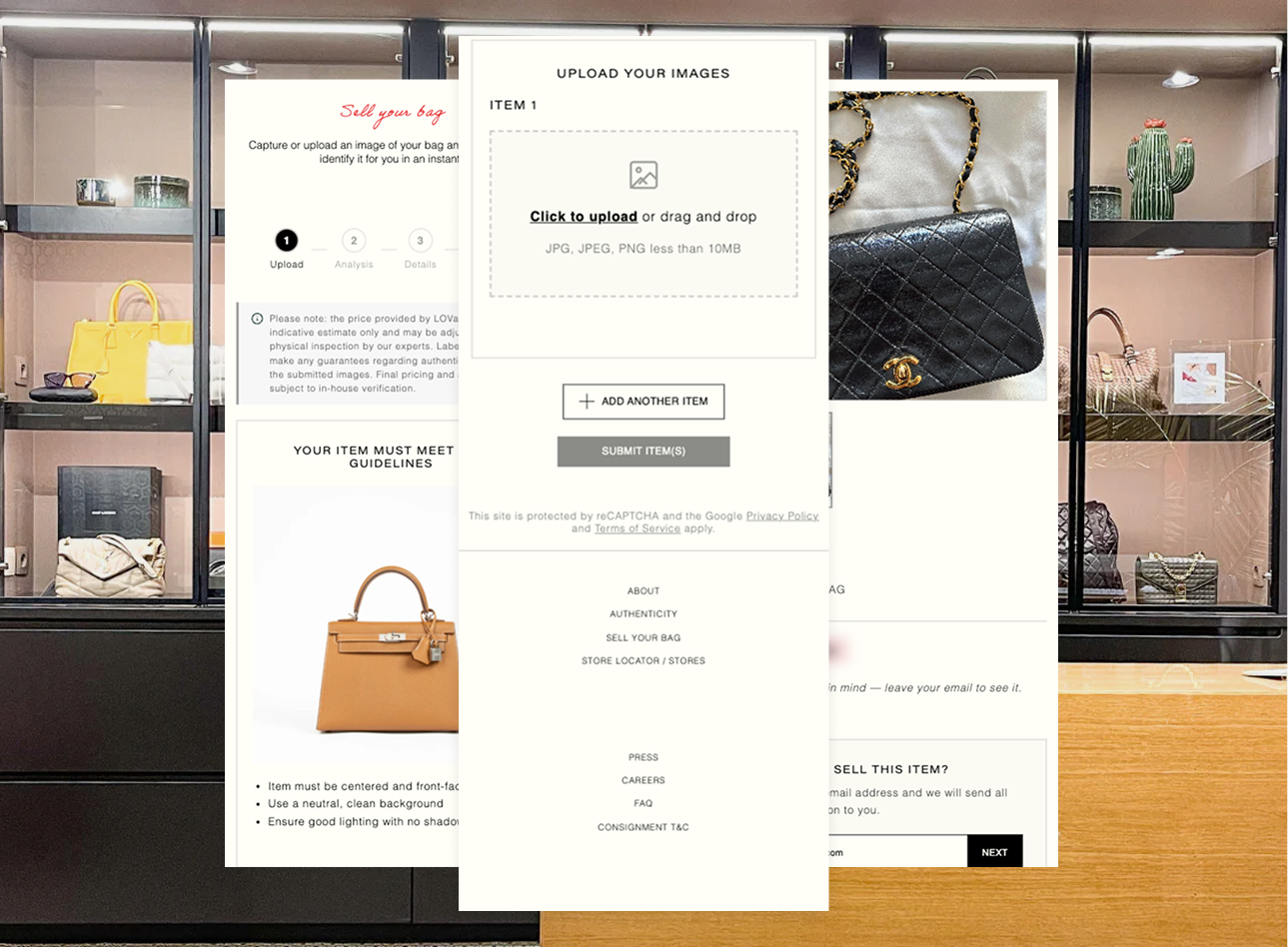
We migrated Labellov to Shopify Plus and rebuilt the commerce stack around the way they work: ten years of product data cleaned up and restructured, a Sell Your Bag flow with AI-assisted pricing, and POS connected to live inventory in every store, with Microsoft Dynamics 365 Business Central as the ERP backbone.
The migration: 40,000 unique products, one shot to get it right
Labellov's catalogue counts more than 40,000 items, and every single one is unique. A decade of listings also meant a decade of inconsistencies: missing model names, attributes that meant different things in different years, and a structure that didn't map onto Shopify's data model.
Rather than migrating the mess, we used AI to process the raw Magento export, classify each item and rebuild the catalogue into a clean, consistent structure. That decision set the tone for the whole project: fix the foundation first, then build on top of it.

A storefront built for one-of-a-kind stock
Every item Labellov sells exists exactly once. We designed the platform around that reality instead of forcing it into a standard catalogue setup.
Product data flows into Shopify in a structured, consistent format, so buyers get a precise picture of what they're considering: brand, model, condition and dimensions, presented the same way on every listing.
Customer accounts now show the full relationship with Labellov: bags bought on one side, bags sold through Sell Your Bag on the other. One view for everything a customer does on the platform.
And because the catalogue turns over fast, a bag you missed rarely comes back. We built a notify-me feature on top of custom Klaviyo events, matching on three pillars: brand, category and price range. An alert only fires when all three line up. Sign up for a Chanel flap bag in your price range and you hear about it the moment one lands, not every time any Chanel item is listed.
A dedicated sold-items category rounds it off, showing what has moved and at which price point. It builds trust with sellers and gives buyers a healthy sense of urgency, without a single popup.
.png)
The architecture: Shopify Plus, Business Central and the official Microsoft Connector
Behind the storefront, Microsoft Dynamics 365 Business Central runs the operation: stock, store locations, invoicing and finance. We connected it to Shopify Plus through the official Shopify Connector from Microsoft, so products, inventory levels and orders stay in sync between both systems without custom middleware to maintain.
That same data powers retail. Shopify POS runs in every boutique, and the store locator on the website reads live inventory per location. A customer browsing online sees which store has the bag on the shelf, not just that it exists somewhere in the system.
Checkout carried its own complexity. A meaningful share of Labellov's customers buys on invoice or purchases as a business gift, so checkout handles the correct VAT treatment per case, and invoice data flows straight into Business Central, where the right documentation follows each order automatically.
Handover: getting the team ready to run it
A platform is only as good as the team running it. We closed the project with hands-on training sessions and live demos of the new checkout and admin workflows. It's the least visible part of a migration, and the part that decides whether it sticks.